
How can you Optimize your Website’s content for SEO?

In this article we are going to talk about How can you optimize your website’s content for SEO? In the world of online marketing, search engine optimization (SEO) is crucial for attracting more visitors to your website through organic search results. One crucial aspect of SEO is content optimization, which involves tailoring your website’s content to make it more visible and relevant to search engines.

How can you Optimize your Website’s content for SEO?

In this comprehensive article, we will explore various strategies and best practices to optimize your website’s content for SEO. By implementing these techniques, you can improve your search engine rankings, increase organic traffic, and enhance your overall online presence.

1. Conduct Keyword Research

Keyword research is the foundation of content optimization for SEO. It involves identifying the specific words and phrases that your target audience uses when searching for information related to your website’s topic or industry. By using keyword research tools and analyzing search trends, you can discover high-volume, relevant keywords to incorporate into your content. These keywords should be strategically placed in your website’s titles, headings, meta descriptions, and throughout the body of your content to increase its visibility to search engines.

2. Create High-Quality, Engaging Content

Content quality is paramount for effective SEO optimization. To optimize your website’s content, focus on the following aspects:
Optimize your Website’s content for SEO

a) Relevance

Ensure that your content aligns with the interests and needs of your target audience. It should provide valuable information and address their queries or pain points.

b) Uniqueness

Create original and unique content that stands out from competitors. Avoid duplicate content, as search engines prioritize fresh and original material.

c) Readability

Structure your content in a user-friendly manner, using headings, subheadings, bullet points, and paragraphs. Use concise sentences and easy-to-understand language to improve readability.

d) Visual Elements

Incorporate relevant images, videos, infographics, and other multimedia elements to enhance user engagement. Optimize these visual elements by using descriptive file names and alt tags.

e) Length

While there is no definitive rule for content length, aim for comprehensive, in-depth articles that cover the topic thoroughly. Longer articles or content pieces often rank higher in search engines, meaning they have a better chance of appearing at the top of search results.

Read Also: How Can You Optimize your Website for Mobile Usability?

3. Optimize On-Page Elements

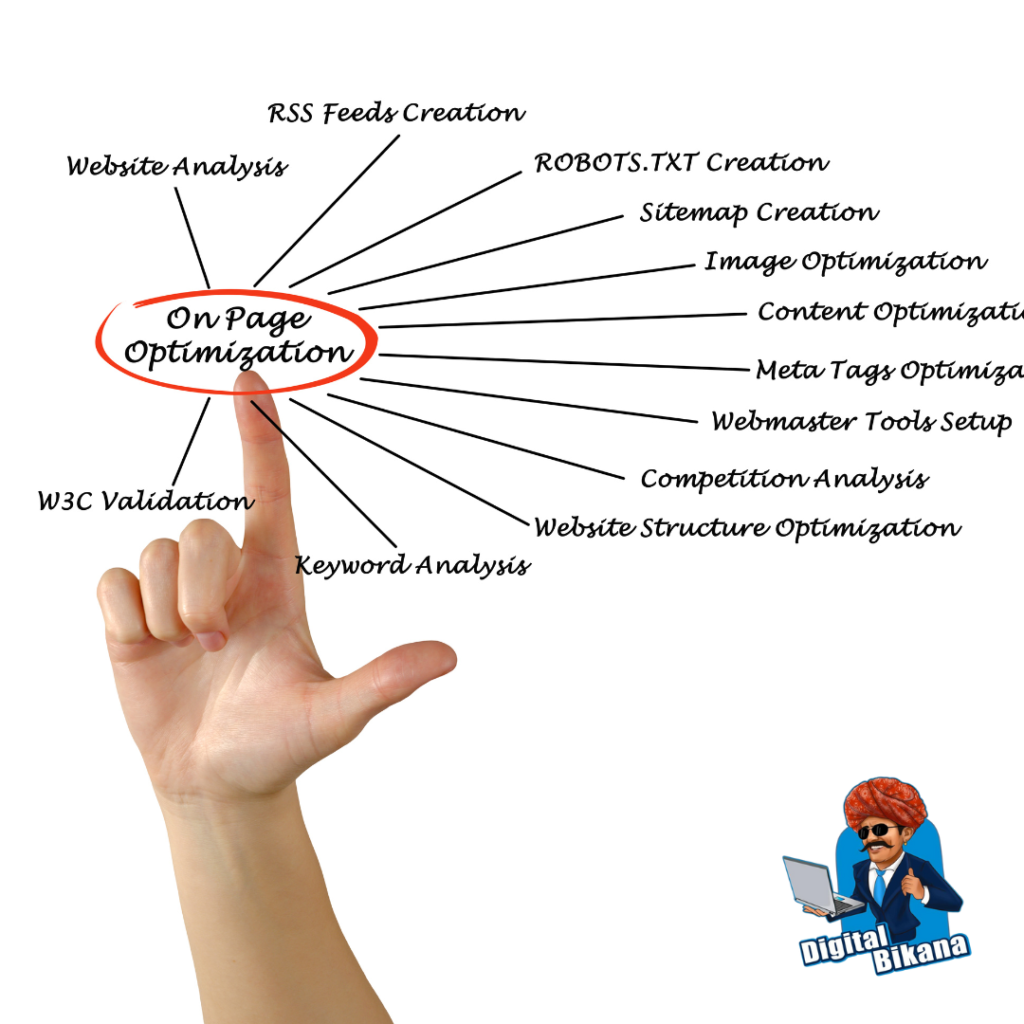
On-page optimization involves optimizing various elements of your web pages to improve their visibility to search engines. Consider the following practices:

a) Page Titles and Meta Descriptions

Craft compelling and keyword-rich titles and meta descriptions that accurately describe your content. These elements, such as page titles and descriptions, are visible in search engine results and can impact the likelihood of people clicking on your website.

b) Heading Tags

Use relevant heading tags (H1, H2, H3, etc.) to structure your content hierarchically. Include your primary keywords in the headings to signal their importance to search engines.
Optimize your Website’s content for digital marketing

c) URL Structure

Make sure your website URLs are short, clear, and include keywords that are relevant to the content. Avoid using lengthy, confusing URLs with random strings of characters.

d) Internal Linking

Incorporate internal links within your content to connect related pages. This helps search engines understand the relationships between your pages and improves navigation for users.

Read Also: What is the Significance of Internal Linking in SEO?

e) Mobile-Friendliness

Ensure that your website is mobile-responsive and optimized for mobile devices. With the increasing number of mobile searches, mobile-friendliness is crucial for SEO success.

4. Build High-Quality Backlinks

Backlinks are simply links from other websites that direct people to your website. They play a significant role in SEO, signaling to search engines the credibility and relevance of your content. To build high-quality backlinks:

a) Create valuable content that other websites would want to link to naturally.

b) Reach out to relevant websites and influencers in your industry to request backlinks.

c) Guest blogging on reputable websites can help generate backlinks and increase your visibility.

d) Monitor your backlink profile and disavow any spammy or low-quality links that may negatively impact your SEO.

Read Also: What is the Significance of Backlinks in SEO? 

5. Regularly Update and Optimize Your Content

SEO is an ongoing process, and regularly updating and optimizing your content is crucial for maintaining visibility and relevance. Keep your content up to date by adding new information, refreshing statistics, and addressing emerging trends. Monitor keyword performance and make necessary adjustments to your content strategy. Additionally, analyze user engagement metrics, such as bounce rate and time on page, to identify areas for improvement and make necessary optimizations.

You can also checkout this digital marketing institute to learn digital marketing course by enrolling in our course Or Contact Digital Bikana on +91-8949483728

Conclusion:

Optimizing your website’s content for SEO is a fundamental step towards improving its visibility, organic traffic, and search engine rankings. By conducting thorough keyword research, creating high-quality and engaging content, optimizing on-page elements, building high-quality backlinks, and regularly updating your content, you can enhance your website’s SEO performance. Remember that SEO is an ongoing process, and staying abreast of algorithm updates and industry trends is essential for sustained success. Implement these content optimization strategies, and watch your website soar to higher search engine rankings, increased organic traffic, and improved user engagement.

How Can You Optimize your Website for Mobile Usability?

In this article we are going to talk about How can you optimize your website for mobile usability? In the dynamic realm of search engine optimization (SEO), numerous factors contribute to a website’s visibility and ranking. While quality content has always been crucial, content freshness has emerged as a significant aspect in determining a website’s online presence.

How Can You Optimize your Website for Mobile Usability?

In this article, we will delve into the significance of content freshness in SEO and explore how regularly updating and refreshing content can enhance search engine rankings and attract more organic traffic.

1. Meeting User Expectations

In the fast-paced digital age, users expect up-to-date and relevant information when they perform online searches. Content freshness ensures that websites deliver on these expectations by providing current and accurate information. Search engines prioritize displaying fresh content in their search results to meet user demands. By regularly updating your content, you demonstrate a commitment to providing the latest information, thus improving user satisfaction and engagement.

Users are more likely to engage with content that is recent and reflects the latest industry trends, news, and developments. For example, if a user searches for “best smartphones of 2023,” they expect to find articles or reviews that feature the latest smartphone models. By regularly updating your content to include the newest releases and updates, you increase the likelihood of capturing the attention of these users. Fresh and relevant content enhances the user experience and establishes your website as a reliable source of information.

optimize your website for mobile usability hub

2. Improved Search Engine Crawling and Indexing

Search engine crawlers continuously scan the web, indexing and analyzing content to determine its relevance and value. Consistently updating your content sends a strong signal to search engines, indicating the active nature of your website and its deserving attention. Fresh content increases the frequency at which search engine bots crawl your site, leading to faster indexing of new pages or updated content. This ensures that your website remains visible in search results and can capture organic traffic more effectively.

Search engines are designed to provide the most accurate and current information to users. When they encounter a website that frequently updates its content, they are more likely to prioritize it in search rankings. Fresh content enables search engines to recognize your website as a valuable resource, leading to improved visibility and higher search engine rankings.

3. Enhanced Keyword Optimization

Keywords are fundamental to SEO, and content freshness presents an opportunity to optimize them effectively. By updating your content, you can incorporate new and relevant keywords based on the latest industry trends and user search queries. This allows search engines to associate your content with these keywords, increasing the chances of ranking higher in relevant search results.

Keyword optimization requires continual attention and is an ongoing endeavor rather than a one-time task. As user search behavior evolves and new trends emerge, the keywords that drive traffic to your website may change. By regularly refreshing your content, you can identify and incorporate these new keywords into your content strategy. This ensures that your website remains aligned with the language and terms users are using to search for information, improving your visibility and relevance in search results.

Read Also: What is the Significance of Internal Linking in SEO?

4. Increased Social Media Engagement

Fresh content is highly shareable and more likely to generate engagement on social media platforms. When users come across valuable and timely content, they are more inclined to share it with their networks, leading to increased visibility and potential backlinks. Social media signals, such as likes, shares, and comments, play a role in search engine ranking algorithms. By regularly refreshing your content, you increase the likelihood of attracting social signals, thereby enhancing your website’s authority and visibility.

When users share your fresh content on social media, it creates opportunities for others to discover and engage with your website. This amplifies your online presence and can lead to a snowball effect, where more users share and engage with your content, attracting even more organic traffic. Furthermore, social media platforms themselves are search engines in their own right, and having fresh content shared on these platforms can help your website gain visibility beyond traditional search engine results.

Read Also: How does Search Engine Optimization Work?

5. Long-Term Organic Traffic

Content freshness has a long-term impact on organic traffic. Fresh content attracts search engine users who are actively seeking the latest information. By consistently providing updated and relevant content, you can establish your website as a reliable source within your niche. Users are more likely to bookmark and return to websites that consistently deliver valuable and fresh content. This fosters user loyalty and encourages them to share your content, resulting in sustained organic traffic over time.

Regularly updating and refreshing your content not only attracts new users but also retains existing ones. By consistently delivering valuable and fresh content, you establish trust and credibility with your audience, encouraging them to become repeat visitors. Additionally, users who find your content valuable are more likely to share it with others, leading to a steady stream of organic traffic. This is how can you Optimize your Website for Mobile Usability.

optimize your website for mobile usability testing

6. Improved User Experience

User experience is a crucial aspect of SEO, and content freshness contributes to a positive user experience. When users encounter outdated content, they may feel frustrated or disappointed, leading to a negative perception of your website. On the other hand, fresh content keeps users engaged, encourages longer website visits, and increases the chances of conversions. By prioritizing content freshness, you enhance the overall user experience, which in turn positively impacts search engine rankings.

A positive user experience is closely tied to relevancy and usefulness. When users find fresh and updated content that meets their needs, they are more likely to spend time exploring your website and engaging with your brand. This increased engagement can result in lower bounce rates, longer session durations, and a higher number of page views, all of which are positive signals to search engines. By consistently providing fresh content, you create a positive feedback loop where users are more likely to return to your website, leading to improved search engine rankings and sustained organic traffic.

7. Adapting to Algorithm Updates

Search engine algorithms are constantly evolving, and they increasingly emphasize the importance of fresh and relevant content. Major search engines like Google have released algorithm updates such as Google Panda and Google Freshness, which prioritize websites with up-to-date and valuable content. By regularly refreshing your content, you align with these algorithm changes, ensuring your website remains competitive and maintains its visibility in search engine results.

Search engine algorithms aim to deliver the most relevant and valuable content to users. With each algorithm update, search engines become better at identifying and rewarding websites that provide fresh and high-quality content. By embracing content freshness as part of your SEO strategy, you stay ahead of algorithmic changes and position your website to take advantage of the evolving search landscape.

You can also checkout this digital marketing institute to learn digital marketing course by enrolling in our course Or Contact Digital Bikana on +91-8949483728

Conclusion:

Content freshness plays a significant role in SEO, impacting search engine rankings, organic traffic, user engagement, and overall user experience. By regularly updating and refreshing your content, you demonstrate relevance, meet user expectations, and improve search engine crawling and indexing. Additionally, fresh content enhances keyword optimization, boosts social media engagement, and helps adapt to algorithm updates. Embracing content freshness as an integral part of your SEO strategy will enable you to stay relevant, attract organic traffic, and maintain a competitive edge in the digital landscape.

As the digital world continues to evolve, users’ expectations and search engine algorithms will continue to prioritize fresh and relevant content. By continuously updating your content, optimizing keywords, and engaging with your audience through social media, you can ensure that your website remains visible, authoritative, and valuable to users. Content freshness is not a one-time effort but an ongoing commitment to delivering timely and valuable information, establishing your website as a trusted resource, and maximizing your SEO efforts. So, Now I Hope you have understood about How Can You Optimize your Website for Mobile Usability?

How does Search Engine Optimization Work?

In this article we are going to talk about How does search engine optimization work? In the current era of digital dominance, the significance of search engine optimization (SEO) cannot be overstated when it comes to establishing a prosperous online presence. Whether you run a business, maintain a personal blog, or manage a website, understanding how SEO works can greatly impact your visibility and organic traffic from search engines.

How does Search Engine Optimization Work?

This article aims to provide a detailed overview of SEO and shed light on the key factors and strategies involved.

1. Understanding Search Engines

Search engines like Google, Bing, and Yahoo serve as the primary gateway for users to discover information on the web. They employ complex algorithms to crawl and index websites, determining their relevance and ranking them in search results.SEO is all about making your website more visible on search engines. By optimizing your site, you increase the chances of appearing higher in the search results when people look for something online.

what is seo and how it works

2. On-Page Optimization

On-page optimization refers to the techniques used to optimize individual web pages for better search engine rankings. Key on-page factors include:

a. Keyword Research

Identifying relevant keywords and phrases that users are likely to search for. These keywords should be strategically placed in page titles, headings, meta tags, and throughout the content.

b. Content Creation

Creating high-quality, original, and engaging content that caters to users’ search intent. Content should be well-structured, informative, and include relevant keywords naturally.

c. Meta Tags

Optimizing meta tags, including title tags and meta descriptions, to accurately describe the content of each page and entice users to click through to your website.

d. URL Structure

Using descriptive and concise URLs that include relevant keywords.

e. Internal Linking

Linking between pages within your website to improve navigation, user experience, and help search engines understand the site’s architecture.

3. Off-Page Optimization

Off-page optimization involves activities carried out outside your website to enhance its visibility and credibility. Key off-page factors include:

a. Link Building

Earning high-quality backlinks from reputable and relevant websites. Backlinks are like “votes of confidence” for your website. They let search engines know that other websites trust and find your site reliable. This helps search engines see your website as authoritative and trustworthy.

b. Social Signals

Leveraging social media platforms to increase brand visibility and drive traffic to your website. Engagement on social media platforms, including likes, shares, and comments, can have an indirect impact on the rankings of search engines.

c. Online Reputation Management

Monitoring and managing your online reputation to build trust and credibility among users and search engines.

4. Technical SEO

Technical SEO is all about improving the behind-the-scenes aspects of your website. It focuses on making your site easier for search engines to explore, understand, and include in their results. This includes things like ensuring all the pages can be found by search engines, making sure they can read and understand the content, and enhancing the overall performance of your website. Key technical factors include:

How does SEO works

a. Website Speed

Ensuring fast loading times to provide a positive user experience and improve search engine rankings.

b. Mobile-Friendliness

Optimizing your website to be mobile-responsive, as search engines prioritize mobile-friendly sites due to the increasing number of mobile users.

c. Site Structure

Creating a well-organized site structure with clear navigation, XML sitemaps, and breadcrumbs for search engines to understand and crawl your website effectively.

d. Canonicalization

Avoiding duplicate content issues by setting canonical tags to indicate the preferred version of a webpage.

5. User Experience and Engagement

The primary objective of search engines is to provide users with the most relevant and exceptional search results possible. Therefore, user experience (UX) and engagement metrics have become crucial ranking factors. Factors that impact UX and engagement include:

a. Mobile Responsiveness

Ensuring your website is optimized for mobile devices to provide a seamless experience across all screen sizes.

b. Page Load Speed

Optimizing your website’s performance to reduce load times and prevent users from leaving due to slow-loading pages.

c. Bounce Rate

Keeping users engaged by providing relevant and valuable content, thus reducing bounce rates.

d. User-Friendly Navigation

Creating intuitive navigation menus and site structures that allow users to easily find the information they’re seeking.

You can also checkout this digital marketing institute to learn digital marketing course by enrolling in our course Or Contact Digital Bikana on +91-8949483728

Conclusion:

Search engine optimization is an ever-evolving discipline that requires a deep understanding of search engine algorithms, user behavior, and industry trends. By implementing on-page and off-page optimization techniques, focusing on technical aspects, and prioritizing user experience, you can improve your website’s visibility and drive organic traffic from search engines. Remember, SEO is a long-term endeavor that requires ongoing monitoring, adaptation, and optimization to stay ahead in the competitive online landscape. So, Now I hope you have understood about How does Search Engine Optimization Work?

What is the Significance of Internal Linking in SEO?

In this article we are going to talk about What is the significance of internal linking in SEO? Internal linking plays a crucial role in search engine optimization (SEO) by connecting different pages within a website. It involves creating hyperlinks that point from one page to another within the same domain. While often overlooked, internal linking holds significant importance for improving website structure, user experience, and search engine rankings.

What is the Significance of Internal Linking in SEO?

In this comprehensive guide, we will delve into the significance of internal linking in SEO and provide valuable insights on how to optimize your internal linking strategy.

1. Enhancing Website Structure and Navigation

Internal linking helps establish a solid website structure by creating a hierarchical organization of content. By interconnecting related pages, you guide search engines in understanding the relevance and importance of each page. This improves the overall crawlability and indexability of your website, ensuring that search engines can easily discover and index your content.

Moreover, internal links provide a navigation path for users to explore your website. When strategically placed, they help visitors discover and access relevant information, leading to a positive user experience. Clear and intuitive navigation contributes to longer user sessions, increased page views, and reduced bounce rates.

2. Distributing Link Equity and Authority

One of the key benefits of internal linking is the distribution of link equity and authority throughout your website. When a page receives external backlinks, it accumulates link equity. By linking from that page to other internal pages, you pass on a portion of that equity to those linked pages. This helps improve their search engine rankings and visibility.

Strategically linking to important pages with relevant anchor text signals their importance to search engines. It helps search engines understand the topical focus and significance of linked pages within your website. This distribution of link equity helps strengthen the overall authority of your website and contributes to improved rankings.

long tail keyword benefits

3. Boosting Keyword Relevance and Rankings

Internal linking allows you to establish keyword relevance and topical authority within your website. By incorporating targeted anchor text in your internal links, you signal to search engines the content’s subject matter and the keywords associated with it. This helps search engines understand the context and relevance of your pages, leading to improved rankings for those targeted keywords.

When linking between related pages that focus on similar topics or keywords, you create a cluster of interlinked content. This topical cluster signals to search engines the depth and expertise of your content, further boosting keyword relevance and rankings.

Read Also: How Important is Keyword Research in SEO?

4. Encouraging User Engagement and Time on Site

Effective internal linking encourages users to explore your website further and spend more time on your site. By providing relevant and contextual links within your content, you entice users to click and navigate to other valuable pages. This not only increases user engagement but also prolongs the time spent on your website, a positive signal to search engines.

Strategic internal linking can guide users through conversion funnels, leading them from informational pages to transactional or conversion-oriented pages. This helps facilitate the user journey and improves the likelihood of desired actions, such as making a purchase or filling out a form.

5. Best Practices for Internal Linking

a) Contextual and Relevance

Place internal links within the context of your content, ensuring they are relevant to the topic and add value to the user experience. Avoid overusing internal links, as excessive linking can appear spammy and harm user experience.

b) Anchor Text Optimization

Use descriptive and keyword-rich anchor text for internal links. This helps search engines understand the destination page’s relevance and contributes to improved rankings for targeted keywords. However, maintain a natural and diverse anchor text profile to avoid penalties or over-optimization.

Read Also: What is the Role of Anchor Text in SEO?

c) Site-wide Navigation

Implement a user-friendly site-wide navigation menu that includes important pages and categories. This provides users with easy access to key sections of your website and enhances the overall user experience.

d) Sitemap and Breadcrumbs

Include a sitemap and breadcrumb navigation on your website to provide clear paths for users and search engines to navigate through your content. These navigation elements improve website accessibility and crawlability.

e) Update and Audit

Regularly review and update your internal links as your website evolves. Conduct periodic audits to identify broken links or redirects, ensuring a seamless user experience and uninterrupted flow of link equity.

f) External Linking Balance

While internal linking is important, also consider incorporating external links to authoritative and relevant sources. Outbound links can provide additional value to your content and contribute to a healthy linking profile.

long tail keyword research tool free

6. Tools and Analytics for Internal Linking

a) Google Search Console

Monitor your website’s internal linking performance, identify crawl errors, and review link structure using Google Search Console. This tool provides valuable insights into how search engines perceive your internal links.

b) Website Analytics

Utilize website analytics platforms like Google Analytics to track user engagement metrics, such as page views, time on site, and bounce rates. Analyzing these metrics helps you identify areas for improvement and optimize your internal linking strategy.

You can also checkout this digital marketing institute to learn digital marketing course by enrolling in our course Or Contact Digital Bikana on +91-8949483728

Conclusion:

Internal linking is a fundamental aspect of SEO that impacts website structure, user experience, and search engine rankings. By strategically interconnecting your website’s pages, you enhance crawlability, distribute link equity, boost keyword relevance, and encourage user engagement. Implementing best practices and regularly auditing your internal links will contribute to a well-optimized website that ranks higher in search results and provides a seamless user experience. Harness the power of internal linking to strengthen your SEO efforts and establish a strong online presence. So, Now I hope you have understood about What is the Significance of Internal Linking in SEO?
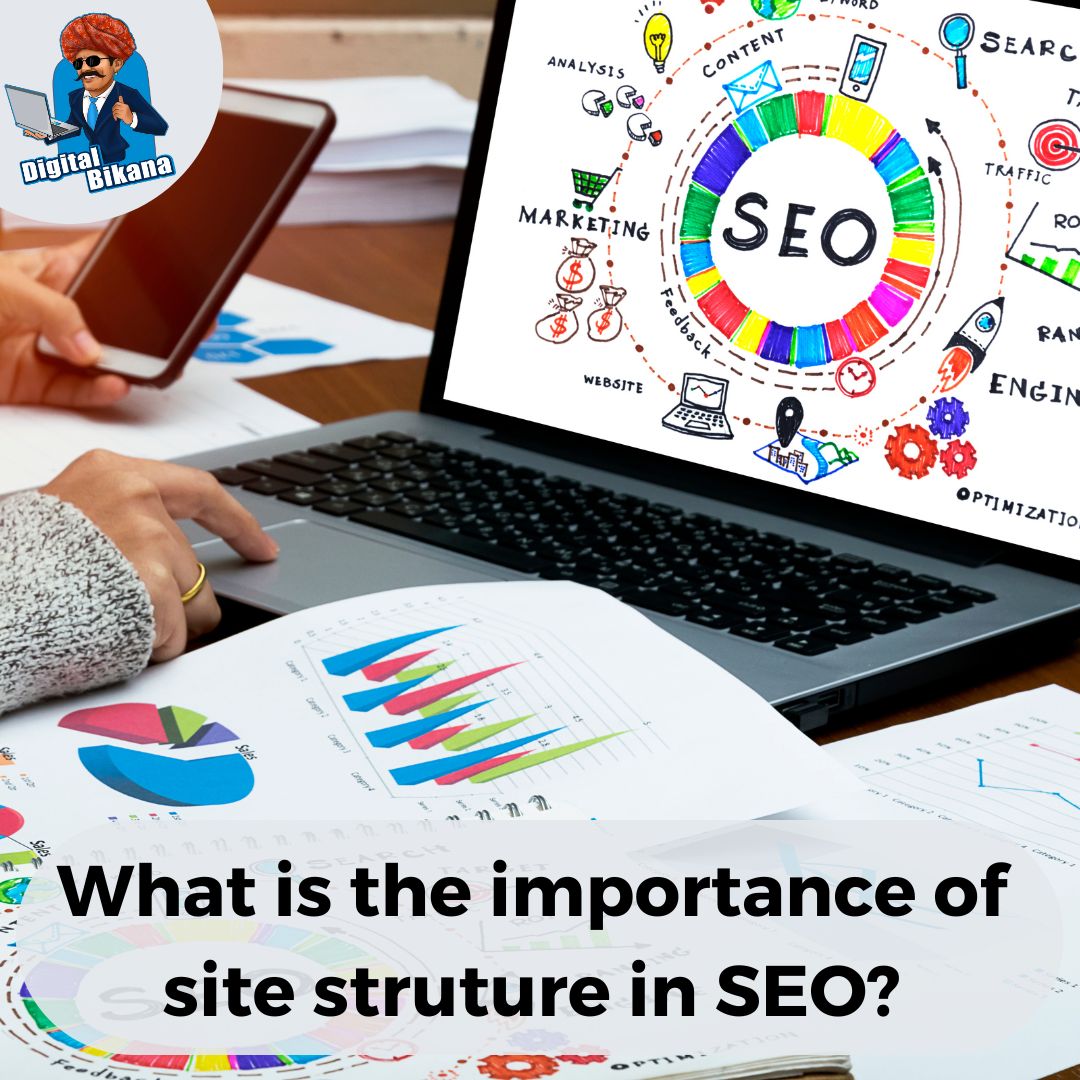
What is the Importance of Site Structure in SEO?

In this article we are going to talk about Importance of site structure in SEO? In the realm of search engine optimization (SEO), site structure plays a vital role in determining the visibility, crawlability, and user experience of a website. A well-organized and logical site structure not only helps search engines understand and index your content effectively but also enhances user navigation and engagement. In this comprehensive guide, we will explore the importance of site structure in SEO and provide practical tips on how to optimize your website’s structure for improved search rankings and user satisfaction.

What is the Importance of Site Structure in SEO?

1. Understanding Site Structure

Site structure refers to the organization and hierarchy of web pages within a website. It determines how content is categorized, grouped, and linked together. An optimized site structure provides a clear roadmap for search engines to discover, index, and rank your content accurately.

2. Benefits of a Well-Structured Website

A well-structured website offers several benefits for both search engines and users:

a) Enhanced Crawling and Indexing

A logical site structure makes it easier for search engine crawlers to navigate and understand your website’s content. It helps ensure that all relevant pages are discovered, indexed, and appropriately ranked in search results.

b) Improved User Experience

A well-organized site structure enhances user experience by providing intuitive navigation, making it easier for visitors to find the information they seek. Clear categories, menus, and internal links help users navigate your site seamlessly, leading to increased engagement and reduced bounce rates.

c) Effective Internal Linking

A well-structured website allows for strategic internal linking. Internal links connect related content, distribute authority throughout the site, and assist search engines in understanding the relationship between different pages.

Read Also: What is the Difference between White Hat and Black Hat SEO Techniques?

d) Targeted Keyword Optimization

A structured site architecture allows you to optimize specific sections or categories of your website for targeted keywords. This helps search engines understand the relevance and context of each page, leading to improved search rankings for relevant queries.

site structure website

3. Tips for Optimizing Site Structure

a) Plan Your Website Hierarchy

Start by outlining the main categories or sections of your website. Consider the logical flow of information and group related content together. Create a hierarchical structure with a clear main navigation menu that reflects the organization of your content.

b) Use Descriptive URLs

Ensure that your URLs are descriptive and contain relevant keywords. Use hyphens to separate words and make them readable and user-friendly.

c) Implement a Flat Structure

Avoid creating unnecessary layers or excessive depth in your site structure. Aim for a flat hierarchy where each page is easily accessible within a few clicks from the homepage. This ensures that search engines can crawl and index your content more efficiently.

Read Also: What is the Role of Anchor Text in SEO?

d) Create a Sitemap

A sitemap is a file that lists all the pages on your website. It provides search engines with a clear understanding of your website’s organization and hierarchical layout. Generate an XML sitemap and submit it to search engines to facilitate crawling and indexing.

e) Optimize Navigation Menus

Design intuitive navigation menus that are easy to understand and use. Utilize descriptive labels and arrange menu items in a logical manner to ensure user-friendly navigation. Include important categories or pages in the main menu for easy access.

f) Utilize Breadcrumb Navigation

Breadcrumb navigation provides additional context and helps users understand their current location within your website. It also facilitates easy navigation and encourages users to explore related content.

You can also checkout this digital marketing institute to learn digital marketing course by enrolling in our course Or Contact Digital Bikana on +91-8949483728

g) Implement Internal Linking

Strategically link related pages within your website using descriptive anchor text. Internal linking assists search engines in comprehending the significance and structural organization of your content. It also improves user navigation and encourages deeper engagement.

h) Mobile-Friendly Design

With the increasing use of mobile devices, it is crucial to ensure that your site structure is mobile-friendly. Optimize your site for responsiveness and provide a seamless user experience across different devices.

i) Monitor and Improve

Regularly analyze your site’s performance using web analytics tools. Monitor user behavior, engagement metrics, and search rankings to identify areas for improvement. Make necessary adjustments to your site structure based on the insights gathered.

site structure - enhance-seo

Conclusion:

A well-optimized site structure is a critical component of successful SEO. It facilitates efficient crawling and indexing by search engines, enhances user experience, and improves the overall visibility and rankings of your website. By planning a logical hierarchy, optimizing navigation, implementing internal linking, and regularly monitoring your site’s performance, you can ensure that your website is structured in a way that maximizes its potential for search engine visibility and user satisfaction. Invest time and effort in optimizing your site structure, and you will reap the rewards of improved search rankings, increased organic traffic, and better user engagement. So, Now I hope you have understood about What is the Importance of Site Structure in SEO?
What is the Role of Anchor Text in SEO?

In this article we are going to talk about What is the role of anchor text in SEO? In the vast landscape of search engine optimization (SEO), various factors influence a website’s visibility and ranking on search engine results pages (SERPs). One such important element is anchor text. It plays a significant role in SEO by providing context to search engines about the linked page’s content. In this article, we will delve into the role of anchor text in SEO and explore its various types, best practices, and impact on search rankings.

What is the Role of Anchor Text in SEO?

In this article, we will delve into the role of anchor text in SEO and explore its various types, best practices, and impact on search rankings.

importance of anchor text in seo

1. Understanding Anchor Text

Anchor text serves as a valuable signal for search engines to understand the relevance and topic of a linked page. When a search engine crawls a webpage and encounters an anchor text, it analyzes the text’s content to determine the context and topic of the linked page. Anchor text helps search engines establish the relationship between different webpages and improve the accuracy of search results.

2. Types of Anchor Text

a) Exact Match Anchor Text

This type of anchor text includes the exact keyword or key phrase that matches the target page’s content. For example, if the target page is about “best SEO practices,” the anchor text would be “best SEO practices.” Exact match anchor text provides a clear signal to search engines about the content relevance.

b) Partial Match Anchor Text

Partial match anchor text contains a variation or partial match of the target page’s keyword or key phrase. For instance, if the target page is about “best SEO practices,” the anchor text could be “top SEO techniques” or “effective SEO strategies.” It still provides a relevant context but allows for some variation.

c) Branded Anchor Text

Branded anchor text uses the brand name or the business name as the clickable text. For example, if the target page is the homepage of a company named “ABC Solutions,” the anchor text could be “ABC Solutions” or “Visit ABC Solutions.” Branded anchor text helps strengthen brand recognition and signals the importance of the brand to search engines.

d) Naked URLs

Naked URLs serve as anchor text when the full URL of the target page is used. For example, “https://www.example.com” is the anchor text. While not as descriptive as other types, naked URLs are useful when the focus is on sharing the exact URL or directing users to a specific website.

e) Generic Anchor Text

Generic anchor text uses non-descriptive terms such as “click here,” “learn more,” or “read more” as the anchor text. While generic anchor text is common, it provides minimal context to search engines regarding the linked page’s content. It is advisable to use more descriptive anchor text whenever possible.

3. Best Practices for Anchor Text Optimization

a) Relevance and Context

Choose anchor text that accurately represents the content of the linked page. The text should provide users and search engines with a clear understanding of what they can expect upon clicking the link. Relevant and contextual anchor text enhances the user experience and reinforces the topic of the linked page.

b) Diversify Anchor Text

Avoid overusing exact match anchor text, as it may raise concerns with search engines and trigger spam filters. Instead, diversify your anchor text by using a combination of partial match, branded, and natural anchor text variations. This approach appears more organic and natural to search engines.

c) Natural Language

Incorporate anchor text that reflects natural language patterns and flows seamlessly within the content. The text should read naturally and be in line with user expectations. Avoid keyword stuffing or using repetitive anchor text, as it can be viewed as manipulative and harm your SEO efforts.

d) Internal Linking

Utilize anchor text strategically within your website’s internal linking structure. Link relevant keywords or phrases to relevant pages on your website to enhance navigation and improve the flow of link equity. Internal linking with well-optimized anchor text helps search engines understand the architecture and content hierarchy of your website.

You can also checkout this digital marketing institute to learn digital marketing course by enrolling in our course Or Contact Digital Bikana on +91-8949483728

e) External Linking

When linking to external websites, choose anchor text that provides a clear description of the destination page’s content. Use anchor text that helps users and search engines understand the relevance and purpose of the link. External linking with descriptive anchor text can also contribute to a positive user experience.

Optimize your Website’s content for digital marketing

4. Impact on Search Rankings

Anchor text has a significant impact on search rankings and SEO. It helps search engines understand the content relevance, context, and topical focus of linked pages. Well-optimized anchor text, with relevant keywords and variations, can positively influence search engine rankings for targeted keywords. However, it is crucial to maintain a natural and diverse anchor text profile to avoid potential penalties or algorithmic filters.

5. Tips for Effective Anchor Text Usage

a) Conduct Keyword Research

Before selecting anchor text, conduct keyword research to identify relevant and targeted keywords or phrases. This research will help you understand the language your audience uses when searching for related content.

b) Analyze Competitor Strategies

Analyze the anchor text strategies of your competitors to gain insights into their approach. This analysis can help you identify opportunities, refine your own strategy, and differentiate your anchor text usage.

c) Monitor and Adjust

Regularly monitor the performance of your anchor text and its impact on search rankings. Use analytics tools to track changes and make adjustments if needed. Stay updated with search engine algorithm changes and adapt your anchor text strategy accordingly.

d) Seek Quality Backlinks

Building high-quality backlinks from authoritative websites enhances the credibility and impact of your anchor text. Focus on obtaining relevant and natural backlinks from reputable sources within your industry or niche.

e) User Experience First

While anchor text is important for SEO, prioritize the user experience. Ensure that the anchor text aligns with user expectations, provides valuable information, and encourages users to click and explore further.

Conclusion:

Anchor text plays a pivotal role in SEO, providing valuable context to search engines and users about the content of linked pages. By optimizing anchor text with relevant keywords, diversifying anchor text variations, and maintaining a natural language flow, you can enhance your website’s visibility and search rankings. Remember to focus on relevance, user experience, and diversity when incorporating anchor text into your SEO strategy. A well-executed anchor text strategy contributes to a more robust and effective SEO campaign, ultimately driving organic traffic and improving online visibility. So, Now I hope you have understood about What is the Role of Anchor Text in SEO?

How to Optimize your Website for Google’s E-A-T Guidelines?

In this article we are going to talk about How to optimize your website for google’s E-A-T guidelines? In the vast world of search engine optimization (SEO), keeping up with Google’s guidelines is essential to ensure your website’s visibility and rankings. One critical aspect of SEO is optimizing your website for Google’s E-A-T guidelines. E-A-T stands for Expertise, Authoritativeness, and Trustworthiness, and it serves as a framework for evaluating the quality and credibility of web content.

How can you Optimize your Website for Google’s E-A-T Guidelines?

In this article, we will delve into the significance of E-A-T and explore effective strategies to optimize your website accordingly.

1. Understanding Google’s E-A-T Guidelines

a) Expertise

Google values content that is created by experts who possess deep knowledge, skills, and experience in their respective fields. Demonstrating expertise through high-quality content helps build trust and credibility.

b) Authoritativeness

Authoritativeness refers to the reputation and influence of a website or individual within a specific industry or subject area. Websites that are considered authoritative often have a strong online presence, quality backlinks, and recognition from industry experts.

c) Trustworthiness

Trustworthiness involves building credibility and establishing trust with users. It encompasses factors such as accurate and reliable information, transparent practices, secure transactions, and positive user feedback.

2. Focus on High-Quality Content

Creating high-quality content is a foundational element of optimizing for E-A-T:

a) Expert-Level Content

Develop well-researched, comprehensive, and authoritative content that showcases your expertise in the niche. Address user queries, provide valuable insights, and offer solutions to their problems.

b) Credible Sources and Citations

When presenting information or making claims, support them with reputable sources and citations. Linking to authoritative sources within your content helps establish credibility and enhances trustworthiness.

c) Original and Unique Content

Avoid duplicate or thin content. Focus on creating original and unique content that provides value to your audience. Plagiarism and low-quality content can negatively impact your website’s E-A-T.

d) Clear Authorship and Biographies

Clearly attribute content to its respective authors. Include author biographies, credentials, and relevant expertise to establish trust and expertise.

website for google's E-A-I guildlines for digital marketing

3. Enhance Your Website’s Authority

Building authority is vital for optimizing your website for E-A-T:

a) Earn Quality Backlinks

Focus on building a strong backlink profile by earning high-quality backlinks from reputable websites within your industry. Backlinks from authoritative sources act as a vote of confidence, indicating your website’s credibility and authority.

Read Also: How Important is Keyword Research in SEO?

b) Guest Blogging and Thought Leadership

Contribute guest articles to well-established and relevant publications within your industry. By sharing your expertise and insights, you can establish yourself as a thought leader and enhance your website’s authority.

c) Social Proof

Leverage social media platforms to build your online presence and engage with your audience. Positive social signals, such as likes, shares, and positive reviews, contribute to your website’s authority and trustworthiness.

4. Establish Trust and Credibility

Creating a trustworthy and credible website is essential for optimizing E-A-T:

a) Secure Website

Implement SSL certificates to ensure secure communication between your website and users. A secure website helps build trust and improves user experience.

b) Privacy Policy and Terms of Service

Clearly communicate your website’s privacy policy and terms of service to users. This demonstrates transparency and fosters trust.

c) User Reviews and Testimonials

Encourage users to leave reviews and testimonials about your products, services, or content. Positive user feedback contributes to your website’s trustworthiness and enhances E-A-T.

d) Authoritative Expert Contributors

Collaborate with recognized experts and influencers in your field. Having expert contributors lend their expertise to your website adds credibility and authority to your content.

website for google's E-A-I guidelines

5. Regularly Update and Maintain Your Website:

To optimize for E-A-T, focus on maintaining a trustworthy and up-to-date website:

a) Fresh and Relevant Content

Continuously update your website with fresh and relevant content. Regularly publish new articles, blog posts, or updates to keep your website current and demonstrate ongoing expertise.

b) Technical Optimization

Ensure your website is technically optimized for performance, speed, and mobile responsiveness. A smooth user experience contributes to trust and user satisfaction.

c) Eliminate Errors and Broken Links

Regularly check for and fix broken links, 404 errors, and other technical issues that may impact user experience and credibility.

You can also checkout this digital marketing institute to learn digital marketing course by enrolling in our course Or Contact Digital Bikana on +91-8949483728

Conclusion:

Optimizing your website for Google’s E-A-T guidelines is crucial for establishing expertise, authoritativeness, and trustworthiness in the eyes of both users and search engines. By creating high-quality content, building authority, and cultivating trust, you can align your website with E-A-T principles and improve its performance in organic search rankings. Remember to prioritize user satisfaction, stay proactive in adapting to SEO trends, and consistently deliver valuable content that demonstrates your expertise. By doing so, you will enhance your website’s visibility, credibility, and overall success in the digital landscape. So, Now I hope you have understood about How can you Optimize your Website for Google’s E-A-T Guidelines?

How Important is Keyword Research in SEO?

In this article we are going to talk about How important is keyword research in SEO? In the realm of effective digital marketing strategies, search engine optimization (SEO) stands as a foundational pillar. It involves various techniques and practices to improve a website’s visibility in search engine results pages (SERPs) and drive organic traffic. Keyword research is a highly important aspect of SEO. Keyword research plays a pivotal role in optimizing a website for search engines and connecting businesses with their target audience. In this article, we will delve into the importance of keyword research in SEO and how it can impact the overall success of a website.

How Important is Keyword Research in SEO?

In this article, we will delve into the importance of keyword research in SEO and how it can impact the overall success of a website.

Understanding Keyword Research:

Keyword research involves identifying and analyzing the specific words and phrases that people use when searching on search engines. These keywords are essential because they reflect the topics, products, or services that people are actively searching for online. Through comprehensive keyword research, website owners and marketers can gain valuable insights into how their target audience uses language, their intentions, and their online behavior.

Keyword research provides valuable information about the popularity and competitiveness of specific search queries. It helps website owners determine which keywords are worth targeting in their SEO efforts and which ones may be too competitive or less relevant to their goals. By targeting the right keywords, businesses can increase their chances of ranking higher in SERPs, attracting relevant traffic, and ultimately converting visitors into customers.

keyword research and analysis is an important part of seo

Importance of Keyword Research in SEO:

1. Content Optimization

Keyword research helps website owners optimize their content to align with the interests and needs of their target audience. By incorporating relevant keywords naturally into website content, such as blog posts, product descriptions, or landing pages, businesses can increase their visibility in search results for those specific keywords. This optimization improves the chances of ranking higher, attracting organic traffic, and boosting conversions.

Read Also: What is the Role of Meta Descriptions in SEO?

2. Improved Relevance and User Experience

Understanding the keywords that users use to find products, services, or information allows website owners to create content that directly caters to their target audience’s needs. By providing relevant and valuable content based on targeted keywords, businesses can enhance the user experience, increase engagement, and establish themselves as authoritative sources in their respective fields.

3. Competitive Advantage

Keyword research helps identify niche or long-tail keywords that have lower competition but are still highly relevant to a website’s offerings. By targeting these less competitive keywords, businesses can have a higher chance of ranking prominently in search results. This strategy allows them to gain a competitive advantage over larger competitors who might focus solely on highly competitive keywords.

4. Content Ideation and Expansion

Keyword research provides inspiration for generating new content ideas and identifying content gaps that can be filled. By analyzing search queries and related keywords, website owners can discover topics that are in demand but not adequately covered by existing content. This enables businesses to create comprehensive and valuable content that satisfies user intent, improves SEO rankings, and drives organic traffic.

Read Also: What is the difference between on-page and off-page SEO?

5. Effective PPC Campaigns

Pay-per-click (PPC) advertising campaigns, such as Google Ads, rely heavily on targeted keywords. Keyword research helps businesses select the most relevant and cost-effective keywords to optimize their PPC campaigns. This approach ensures that ads are displayed to users actively searching for products or services, leading to higher click-through rates (CTR) and improved return on investment (ROI).

what is keyword research important in digital marketing

6. Evolving Search Trends

Keyword research helps businesses stay informed about emerging search trends and shifts in user behavior. By monitoring keyword data and search volume over time, website owners can adapt their SEO strategies to align with changing user interests. This adaptability ensures that businesses remain competitive in the dynamic landscape of search engine rankings.

You can also checkout this digital marketing institute to learn digital marketing course by enrolling in our course Or Contact Digital Bikana on +91-8949483728

Conclusion:

Keyword research is an essential aspect of SEO that should not be overlooked. It provides valuable insights into user behavior, allows website owners to optimize their content for relevant keywords, and increases their chances of ranking higher in search engine results. By understanding the importance of keyword research and implementing effective strategies, businesses can drive organic traffic, improve user experience, and ultimately achieve their online marketing goals. So, Now I hope you have understood about How Important is Keyword Research in SEO?

What is the difference between on-page and off-page SEO?

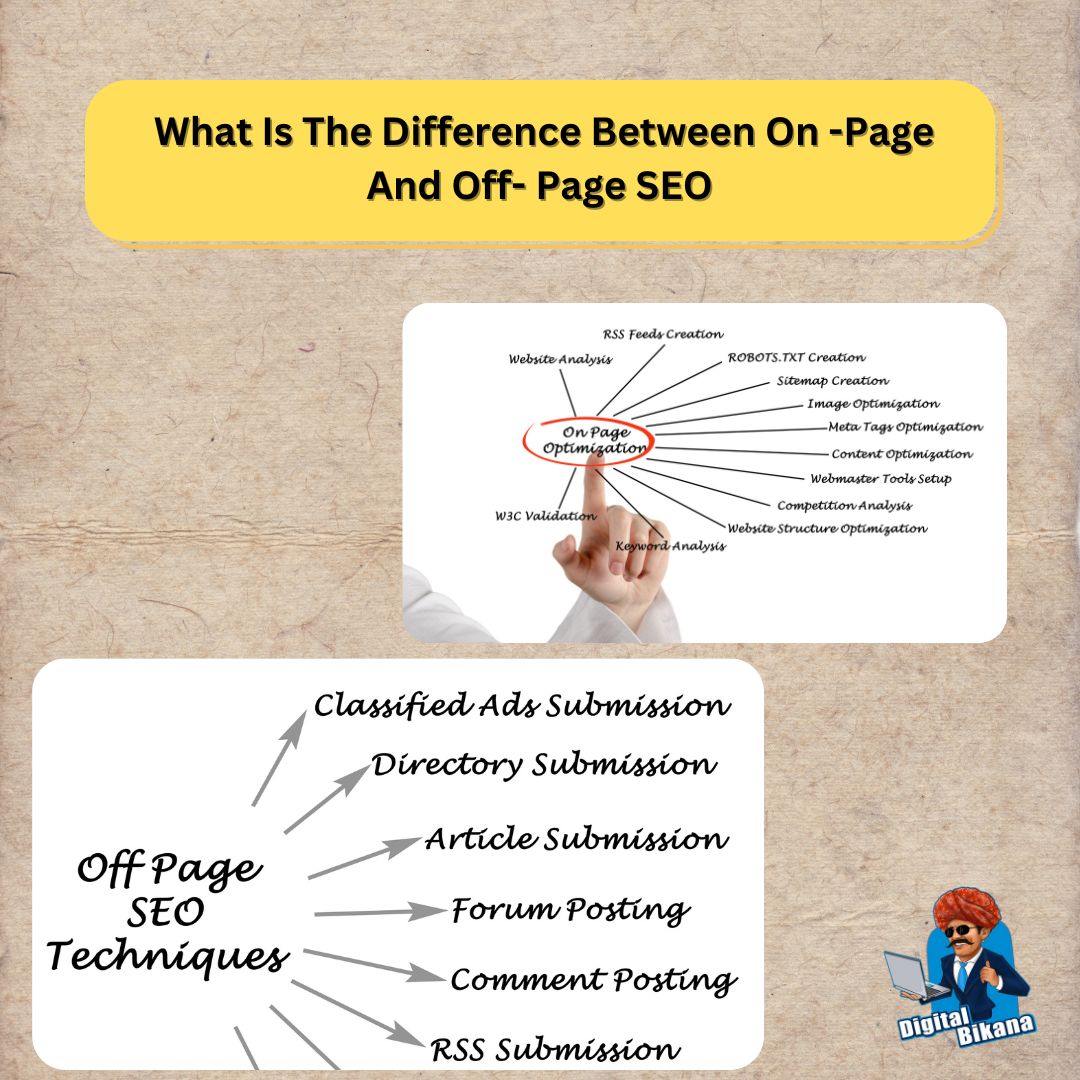
In this article we are going to talk about What is the difference between on-page and off -page SEO? In the world of search engine optimization (SEO), there are two fundamental strategies that help websites improve their search engine rankings and increase organic traffic: on-page SEO and off-page SEO. Both these approaches have distinct focuses and techniques, and understanding the difference between them is crucial for implementing a well-rounded SEO strategy. So, let’s dive into the details and explore the disparities between on-page and off-page SEO.

What is the difference between on-page and off-page SEO?

Both these approaches have distinct focuses and techniques, and understanding the difference between them is crucial for implementing a well-rounded SEO strategy. So, let’s dive into the details and explore the disparities between on-page and off-page SEO.

1. On-Page SEO

On-page SEO refers to the optimization tactics that are implemented directly on a website to enhance its visibility and relevance to search engines. These strategies involve optimizing various elements within the website itself, such as content, HTML source code, and website structure. The primary goal of on-page SEO is to make the website more search engine-friendly and user-friendly, ensuring that it provides a positive experience for both search engines and visitors. Below are some fundamental components of on-page SEO:

a. Keyword Research and Optimization

Identifying and targeting the right keywords relevant to your content is essential. On-page SEO involves incorporating these keywords strategically into your website’s titles, headings, meta descriptions, and content to improve its relevance to search queries.

b. Content Creation and Optimization

Creating high-quality, informative, and engaging content is crucial for on-page SEO. To optimize your content effectively, it involves ensuring the appropriate keyword usage, incorporating relevant headings and subheadings, integrating multimedia elements, and ensuring a seamless reading experience.

c. URL Structure

Having a well-structured URL that includes relevant keywords can improve the visibility of your web pages to search engines.

d. Meta Tags

Meta tags provide information about your webpage to search engines. Optimizing meta tags, such as the title tag and meta description, can influence click-through rates from search engine result pages (SERPs).

e. Internal Linking

Creating a logical internal linking structure helps search engines understand the hierarchy and relevance of the content on your website. It also enables visitors to navigate through your website easily.

f. Website Speed and Mobile Friendliness

Optimizing website speed and ensuring mobile responsiveness are critical factors for providing a positive user experience. Search engines prioritize websites that are fast and mobile-friendly in their rankings.

on page and off page seo

2. Off-Page SEO

Off-page SEO, on the other hand, focuses on activities carried out outside the website to improve its visibility and credibility across the internet. These strategies aim to enhance the website’s authority, reputation, and popularity among users and search engines. Off-page SEO primarily revolves around acquiring high-quality backlinks from other reputable websites, as well as engaging in various promotional activities. Below are some fundamental components of off-page SEO:

a. Link Building

Acquiring quality backlinks from authoritative and relevant websites plays a significant role in off-page SEO. Search engines consider backlinks as votes of confidence, indicating that your website is trustworthy and valuable.

Read Also: What is the Significance of Backlinks in SEO? 

b. Social Media Marketing

Engaging with your audience on social media platforms and promoting your content can help generate brand awareness, drive traffic to your website, and increase social signals, which indirectly impact your search engine rankings.

c. Online Reputation Management

Monitoring and managing your brand’s online reputation is crucial. Building positive brand mentions and addressing any negative reviews or comments can influence the perception of your website in the eyes of search engines and users.

d. Influencer Marketing

Collaborating with influencers or industry experts can help amplify your brand’s reach, attract new audiences, and generate valuable backlinks to your website.

You can also checkout this digital marketing institute to learn digital marketing course by enrolling in our course Or Contact Digital Bikana on +91-8949483728

e. Guest Blogging

Writing informative and relevant articles for other reputable websites within your industry allows you to showcase your expertise and gain backlinks to your site.

f. Social Bookmarking

Sharing your website content on social bookmarking platforms can increase its visibility and attract traffic to your site.

on page and off page optimization in digital marketing

Conclusion:

In summary, on-page SEO focuses on optimizing the various elements within your website to improve its relevance and user experience, while off-page SEO revolves around building external signals of authority, such as backlinks and brand mentions, to improve your website’s visibility and reputation across the internet. Both on-page and off-page SEO strategies are essential components of a comprehensive SEO approach, and a well-executed combination of these tactics can help you achieve higher search engine rankings, increased organic traffic, and improved overall online presence. So, Now I hope you have understood about What is the difference between on-page and off-page SEO?

What is the Role of Meta Descriptions in SEO?

In this article we are going to talk about What is the role of meta descriptions in SEO? In the world of search engine optimization (SEO), meta descriptions play a crucial role in enhancing click-through rates (CTR) and improving search visibility. While meta descriptions may not directly impact search engine rankings, they serve as a vital tool to entice users and provide concise information about the webpage’s content.

What is the Role of Meta Descriptions in SEO?

In this article, we will explore the significance of meta descriptions in SEO, their impact on CTR, best practices for crafting effective meta descriptions, and how they contribute to your overall SEO strategy.

1. Definition and Purpose of Meta Descriptions

Meta descriptions are HTML tags that provide a brief summary or snippet of information about a webpage’s content. They show up below the page title and URL in search engine results pages (SERPs). The primary purpose of meta descriptions is to provide users with a concise preview of what they can expect to find on the webpage, encouraging them to click and visit your site.

Read Also: What are Meta Tags and how are they relevant to SEO?

2. Enhancing Click-Through Rates (CTR)

A compelling meta description can significantly impact your website’s CTR. When users see an enticing and relevant meta description in the search results, they are more likely to click on your webpage. Here’s how meta descriptions contribute to improving CTR:

meta-description-seo-wordpress

a. Informative and Engaging Preview

Meta descriptions provide an opportunity to showcase the value and relevance of your webpage’s content. By crafting concise and engaging descriptions, you can capture users’ attention and entice them to click on your link.

b. Differentiation from Competitors

In a crowded search results page, a well-written meta description can help your webpage stand out from the competition. By highlighting unique selling points, key features, or benefits, you can differentiate your webpage and attract more clicks.

c. Call-to-Action (CTA)

Including a persuasive call-to-action in your meta description can also influence users’ decision-making process. A clear and compelling CTA, such as “Learn More,” “Discover Now,” or “Get Started,” can encourage users to click and explore your webpage further.

3. Impact on Search Visibility

While meta descriptions don’t directly influence search engine rankings, they indirectly contribute to your website’s search visibility in the following ways:

a. Snippet Optimization

Search engines may display the meta description in the search results as the snippet for your webpage. By crafting informative and keyword-rich descriptions, you can optimize your snippet and increase the likelihood of search engines using it.

b. Keyword Relevance

Including relevant keywords in your meta descriptions can help search engines understand the content of your webpage and its relevance to users’ search queries. This alignment between keywords and meta descriptions can positively impact your overall search visibility.

4. Best Practices for Crafting Effective Meta Descriptions

To make the most of your meta descriptions, consider the following best practices:

a. Concise and Compelling

Keep your meta descriptions concise, typically between 50-160 characters, to ensure they display fully in the search results. Use persuasive language to entice users and accurately represent your webpage’s content.

b. Keyword Optimization

Incorporate relevant keywords naturally into your meta descriptions, as this can help improve the alignment between user queries and your webpage’s content. However, it’s important to avoid keyword stuffing as it can harm the user experience.

Read Also: What are Meta Tags and how are they relevant to SEO?

c. Unique Descriptions

Craft unique meta descriptions for each webpage to provide specific and accurate information about the content users can expect. Avoid duplicating descriptions, as this can confuse search engines and diminish their effectiveness.

meta description seo in social media

d. Relevance to Content

Ensure that your meta descriptions accurately reflect the content of the webpage. Misleading or irrelevant descriptions can lead to higher bounce rates and a negative impact on user experience.

e. Compelling Call-to-Action

Include a clear and relevant call-to-action in your meta descriptions to encourage users to take the desired action, such as visiting your website, making a purchase, or signing up for a newsletter.

You can also checkout this digital marketing institute to learn digital marketing course by enrolling in our course Or Contact Digital Bikana on +91-8949483728

5. Monitoring and Optimization

Continuously monitor the performance of your meta descriptions using web analytics tools. Evaluate their impact on CTR, engagement metrics, and user behavior. If certain meta descriptions are underperforming, consider refining them to better align with user intent and expectations.

Conclusion:

Meta descriptions play a vital role in SEO by enhancing click-through rates and improving search visibility. Crafting compelling and concise descriptions can entice users to click on your webpage, leading to increased traffic and potential conversions. Remember to optimize meta descriptions with relevant keywords, provide accurate previews of your content, and include compelling calls-to-action. By implementing effective meta description strategies, you can maximize the potential of your SEO efforts and improve the overall user experience. So, Now I hope you have understood about What is the Role of Meta Descriptions in SEO?